
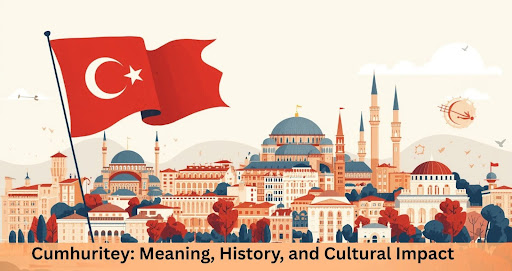
Cumhuritey, a term deeply embedded in the fabric of Turkish identity, transcends mere definition. It represents a pivotal moment in history and embodies principles that continue to shape contemporary Turkish society.
As Turkey navigates its unique path between tradition and modernity, understanding cumhuritey becomes essential for grasping its cultural landscape.
This blog post delves into the meaning of cumhuritey, exploring its historical origins and significance within the context of Turkish republicanism.
We will uncover key values associated with this concept and examine how it influences civic identity today. Join us on this enlightening journey as we uncover how cumhuritey remains relevant amid changing times, fostering discussion around national pride, democracy, and culture in Turkey.
What Is Cumhuritey? A Definition and Overview
Cumhuritey is a Turkish term that translates to “republic.” It signifies more than just a form of government; it embodies the values, principles, and aspirations associated with republicanism in Turkey.
The concept emerged during the early 20th century as part of a broader movement towards modernization and national sovereignty.
At its core, cumhuritey emphasizes citizenship rights, social equality, and political participation. It reflects the belief that power should rest with the people rather than monarchs or ruling elites.
This foundational idea played a crucial role in shaping modern Turkey’s identity after the fall of the Ottoman Empire.
The establishment of cumhuritey was officially marked on October 29, 1923, when Mustafa Kemal Atatürk declared Turkey as a republic.
This shift aimed to create an inclusive society where citizens had equal opportunities regardless of their background.
Cumhuritey is also tied closely to secularism—a significant aspect that separates religion from state affairs. This principle fosters an environment where diverse beliefs can coexist peacefully within one nation.
As such, cumhuritey remains integral to understanding contemporary Turkish governance and civic life while influencing how citizens perceive themselves within this evolving landscape.
The Historical Origins of Cumhuritey
Cumhuritey, the Turkish term for “republic,” has its roots deeply embedded in the early 20th century. It emerged during a significant period of transformation following centuries of Ottoman rule. As the empire began to crumble after World War I, a new vision for governance took shape.
The declaration of Cumhuriyet on October 29, 1923, marked a pivotal moment in Turkish history. This was not only about establishing a new political system but also about redefining national identity.
Mustafa Kemal Atatürk and his followers sought to replace monarchical traditions with democratic values.
The movement was inspired by global republican ideals that gained momentum during the Enlightenment era and were further propagated through revolutions across Europe and America.
These ideas emphasized popular sovereignty and individual rights—concepts that resonated strongly within Turkey’s educated elite.
Atatürk’s reforms aimed to modernize Turkey socially, politically, and culturally while laying down the principles of secularism and nationalism intertwined with Cumhuritey. His vision sparked considerable changes in education, law, women’s rights, and language reform.
The establishment of Cumhuritey signified an end to imperial rule; it paved the way for citizens’ active participation in governance rather than being subjects under an autocratic regime.
Thus began a journey towards building a nation grounded in citizenship rather than ethnicity or status.
Cumhuritey and Its Role in Turkish Republicanism
Cumhuritey plays a pivotal role in Turkish republicanism, embodying the principles that underpin modern Turkey.
Established during the early 20th century, it represents a shift from monarchy to a system where sovereignty resides with the people. This transition was crucial for fostering democratic governance and civil liberties.
In essence, cumhuritey emphasizes popular representation. It advocates for lawmakers who are accountable to citizens rather than hereditary rulers.
This principle encouraged political participation among diverse segments of society, allowing them to voice their opinions and influence decision-making processes.
The philosophy of cumhuritey also aligns closely with secularism in Turkey. The founding leaders sought to create a state where religion did not dictate government policies or educational curricula.
This separation has been instrumental in shaping Turkish identity and preserving social harmony amid diverse beliefs.
Moreover, cumhuritey’s values extend beyond governance into education and cultural realms. Emphasis on rational thought and scientific inquiry reflects its commitment to progressivism. Educational reforms inspired by these ideals have fostered critical thinking skills essential for an engaged citizenry.
Today, as challenges arise within the political landscape, discussions around cumhuritey remain vibrant. Its foundational importance continues to resonate with those advocating for democracy and human rights across Turkey’s evolving sociopolitical climate.
Key Values Represented by Cumhuritey
Cumhuritey embodies several core values that resonate deeply within Turkish society. At its heart lies the principle of sovereignty, emphasizing the idea that power originates from the people. This focus on popular governance is a cornerstone of modern Turkey’s political identity.
Another vital value represented by Cumhuritey is secularism. It promotes a clear separation between religious institutions and state affairs, ensuring that all citizens can practice their beliefs freely without government interference. This tenet has been crucial for fostering an inclusive national identity.
Equality also plays a significant role in Cumhuritey’s framework. It advocates for equal rights among all citizens, regardless of gender, ethnicity, or social status. The push for equality underlines efforts to create a more just society where every individual’s voice matters.
Education is another fundamental aspect tied to Cumhuritey’s values. A well-informed citizenry is essential for democracy to thrive; thus, education initiatives are prioritized to enhance civic participation and awareness among the populace.
Progressivism defines Cumhuritey as it encourages continuous improvement and adaptation in various sectors such as technology, culture, and social policies.
Embracing modernity while respecting traditions ensures that Turkey remains dynamic in an ever-changing world.
Cultural Significance of Cumhuritey Today
Cumhuritey holds a pivotal place in contemporary Turkish culture. Its principles resonate through various facets of society, shaping values and guiding behavior among citizens. At its core, Cumhuritey embodies the ideals of democracy, equality, and secularism.
In everyday life, people express their commitment to these values during national holidays and commemorative events.
Celebrations like Republic Day on October 29th reflect a collective pride in Turkey’s republican heritage. Such occasions foster unity among diverse ethnic groups within the nation.
The arts also play a significant role in promoting Cumhuritey’s themes. Literature, music, and visual arts often challenge traditional norms while advocating for civic rights and freedoms inspired by republican ideals. This creative expression encourages dialogue about identity and belonging.
Educational institutions emphasize the importance of Cumhuritey as well. Curriculums include lessons on democratic governance and citizen responsibilities. This focus nurtures an informed populace equipped to engage actively in societal matters.
Moreover, social movements today continue to draw inspiration from Cumhuritey’s founding tenets. Activists strive to uphold civil liberties while addressing modern challenges such as inequality or discrimination—keeping the spirit of Cumhuritey alive amidst evolving societal landscapes.
Cumhuritey in Media, Politics, and Education
Cumhuritey holds a significant place in Turkish media, politics, and education. In the media landscape, it often serves as a theme for discussions around democracy, national identity, and civic rights.
Journalists and commentators frequently reference cumhuritey to frame news stories or debates regarding Turkey’s political climate.
In the realm of politics, cumhuritey is essential for understanding the principles that underpin modern governance in Turkey. Political leaders invoke this concept to emphasize their commitment to democratic ideals.
Campaign narratives often revolve around protecting cumhuritey as a way of appealing to voters who value democratic participation.
Education plays a crucial role in instilling the values associated with cumhuritey among younger generations. Schools incorporate lessons centered on citizenship and civic responsibility into their curricula.
This educational focus aims to nurture informed citizens who understand their rights and responsibilities within a republic.
Civic organizations also leverage the notion of cumhuritey in various outreach programs designed to promote public engagement.
Workshops that educate citizens about voting processes or community involvement typically draw upon ideas rooted in cumulative experiences linked with this term.
Social movements have used the tenets of cumhuritey as rallying cries for change throughout recent history. Activists argue that adhering closely to its core principles can foster an environment where justice and equality thrive within society.
How Cumhuritey Influences Civic Identity
Cumhuritey plays a crucial role in shaping civic identity in Turkey. It embodies the principles of democracy, sovereignty, and citizenship that are vital for building a cohesive society. These values encourage citizens to actively participate in governance and community affairs.
As individuals identify with cumhuritey, they develop a sense of belonging. This connection fosters loyalty to the nation and its democratic ideals.
Young people are particularly influenced by this concept as it shapes their understanding of what it means to be an active citizen.
Educational institutions emphasize cumhuritey’s values through curricula focused on history, rights, and responsibilities.
Such education instills awareness about civic duties among students, promoting engagement from an early age. Schools often celebrate national events tied to cumhuritey, reinforcing these lessons.
In public discourse, discussions around cumhuritey evoke strong emotions among citizens. Debates about governmental policies often reference its tenets as benchmarks for evaluating progress or shortcomings within Turkish society. As such conversations evolve over time, they help shape collective identities.
Social movements rooted in cumhuritey’s principles advocate for justice and equality. Activists leverage this foundation to address contemporary issues like social rights or environmental concerns—linking past struggles with present initiatives aimed at improving civic life.
Modern Interpretations and Uses of Cumhuritey
Modern interpretations of cumhuritey are diverse, reflecting the evolving landscape of Turkish society. Many view it as a guiding principle for democracy and civic engagement.
Citizens today relate to cumhuritey not merely as a historical concept but as an active part of their lives.
In urban settings, young activists often invoke cumhuritey in discussions about social justice and equality.
They see it as a call to uphold democratic ideals while addressing contemporary issues like gender rights and environmental sustainability. This broadening perspective makes cumhuritey relevant in current debates.
Schools play a crucial role in promoting the values associated with cumhuritey. Educators emphasize principles such as respect for individual freedoms, collective responsibility, and critical thinking among students. By instilling these values early on, they nurture informed citizens who can contribute meaningfully to society.
Cultural expressions also reflect modern views on cumhuritey. Artists use various mediums—film, literature, music—to explore themes related to national identity and citizenship. These works provoke thought about what being part of the republic means today.
Social media has become an important platform for discussing cumhuritey’s significance in modern Turkey. Hashtags related to republican values trend frequently during political events or anniversaries, fostering dialogue across generations about its impact and relevance now.
Criticism and Debates Around Cumhuritey
Cumhuritey, while celebrated for its foundational role in Turkey’s identity, has also faced significant criticism and debate.
Some scholars argue that the term can be overly idealized, detaching it from the complexities of Turkish history. Critics contend that Cumhuritey often overlooks the struggles and voices of minority groups within Turkey.
Many believe that Cumhuritey is intertwined with a nationalist narrative that sometimes marginalizes diverse cultures in the country.
This perspective raises questions about inclusivity and representation in a society marked by various ethnicities and traditions. The challenge lies in balancing national pride with recognition of diversity.
Furthermore, there are discussions around how Cumhuritey has been utilized politically to consolidate power.
Certain factions within political movements have co-opted its ideals to justify authoritarian measures or suppress dissenting views. Such tactics raise alarms about civil liberties and democratic principles.
The generational gap also plays a crucial role in debates surrounding Cumhuritey. Younger generations might interpret this concept differently than their predecessors, leading to varying attitudes toward nationalism versus globalism.
Their evolving perspectives highlight an ongoing dialogue on what it means to uphold these values today.
Recent geopolitical events have prompted further examination of Cumhuritey’s relevance. As Turkey navigates complex international relationships, understanding cumhuriyet as both a historical framework and a contemporary identity remains essential for future discourse.
Final Thoughts on the Relevance of Cumhuritey
The concept of cumhuritey continues to hold significant relevance in contemporary Turkish society. Rooted in a rich historical context, it embodies the aspirations and values that shape modern Turkey.
Cumhuritey is not just an abstract idea; it represents the collective identity of the nation, fostering unity among diverse groups.
As Turkey navigates its place in a rapidly changing world, cumhuritey’s principles serve as guiding lights for civic engagement and democratic governance.
It challenges individuals to think critically about their roles within society and encourages active participation in shaping their future.
Moreover, the ongoing discourse around cumhuritey highlights its adaptability. While some may critique certain interpretations or implementations, these discussions are vital for evolving the concept further. They allow citizens to reflect on what it means to be part of a republic today—making room for new voices while honoring traditional values.
In educational settings, cumhuritey acts as a foundation for teaching civic responsibility and social justice. As young Turks learn about their rights and duties under this framework, they become more empowered citizens capable of contributing positively to their communities.
Cumhuritey’s influence spans multiple dimensions—cultural, political, and social—and underscores its importance as both a historical legacy and a living ideology that continues to inspire generations in Turkey.