The Minnesota Vikings and Chicago Bears rivalry is one of the most storied in NFL history. When these two teams meet on the gridiron, fans can expect a fierce battle filled with intensity and passion. The latest matchup was no exception, as both teams fought hard for supremacy in this critical divisional game.
In this blog post, we will delve into the player stats from the Minnesota Vikings vs Chicago Bears Match Player Stats, highlighting key performances that made an impact on the outcome. Whether you’re a die-hard fan or just curious about how each team fared, our detailed analysis will provide insights into both offensive and defensive standout players along with special teams contributions that shaped this exciting contest. Keep reading to explore all the pivotal moments and statistics from this thrilling clash!
Minnesota Vikings vs Chicago Bears Game Overview
The Minnesota Vikings vs Chicago Bears Match Player Stats in a highly anticipated matchup that drew fans from both sides. The game took place at Soldier Field, setting the stage for an electrifying showdown that had playoff implications.
Both teams entered the contest with something to prove. The Vikings aimed to solidify their position in the NFC playoff picture, while the Bears were desperate for a win to keep their postseason hopes alive. Tensions ran high as each team understood how critical this game was within their division.
From kickoff, it was evident that neither side would back down easily. The first half saw both offenses struggle to find rhythm, leading to a defensive battle where key stops and turnovers dominated play. Each team’s defense showcased its strength early on, making scoring hard-fought and rare.
As we moved into the second half, momentum began to shift dramatically. Big plays started emerging as players rose to the occasion when it mattered most. Fans witnessed thrilling touchdowns and pivotal interceptions that changed possession during crucial moments of the game.
With every quarter unfolding like a chess match between coaches Mike Zimmer and Matt Nagy, strategies evolved rapidly in response to shifting dynamics on field performance—setting up an exhilarating finish that kept audiences glued throughout until time expired.
Key Player Performances in the Minnesota Vikings vs Chicago Bears Match
The Minnesota Vikings vs Chicago Bears Match Player Stats in a thrilling match that showcased several standout performances. Both teams had players who stepped up when it mattered most, making crucial contributions throughout the game.
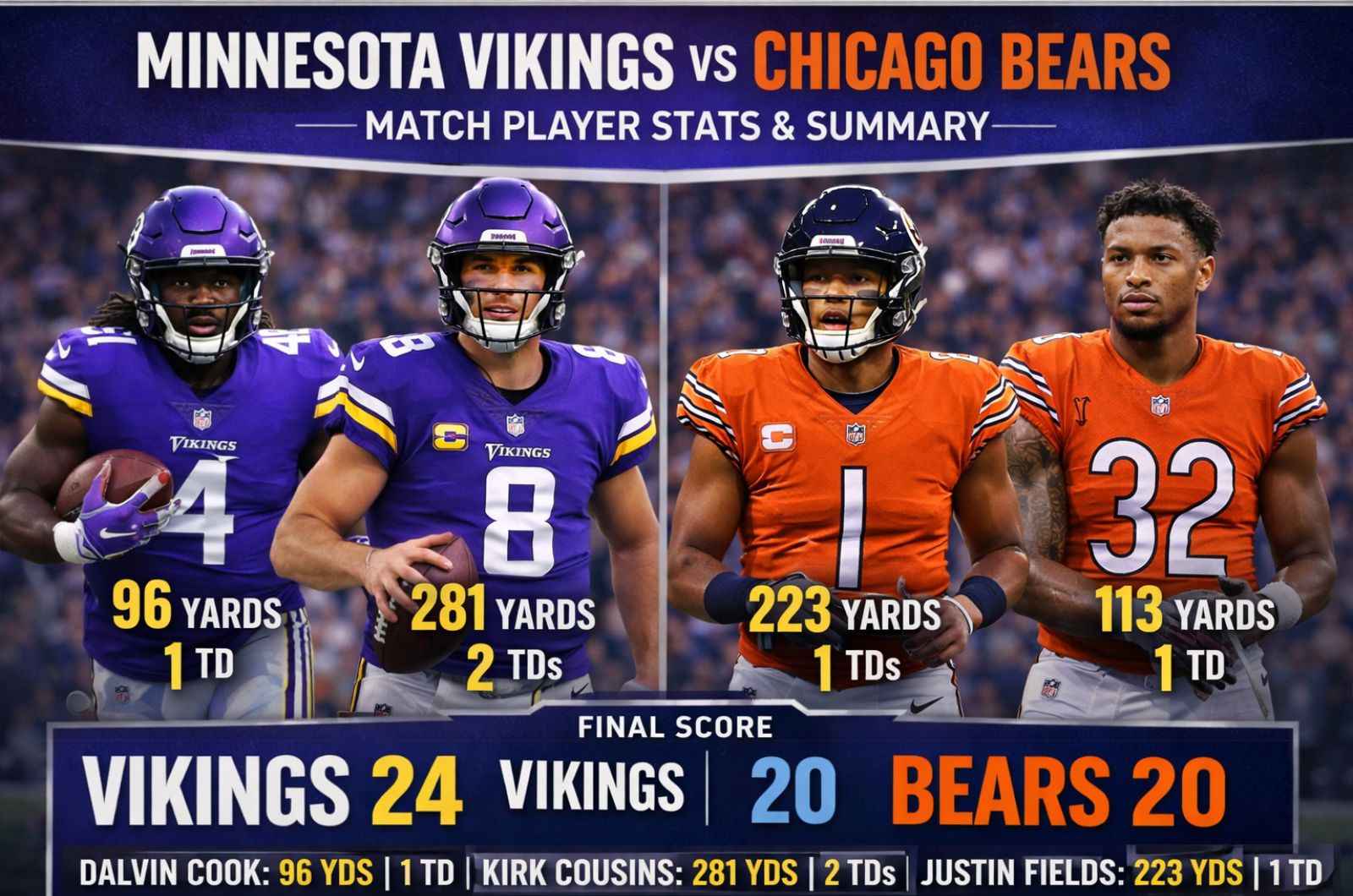
For the Vikings, quarterback Kirk Cousins delivered an impressive performance, throwing for over 300 yards and tossing three touchdown passes. His ability to read defenses and make quick decisions played a pivotal role in keeping the offense moving effectively against a tough Bears defense.
On the ground, running back Dalvin Cook was relentless. He rushed for nearly 100 yards and found the end zone once. Cook’s explosive speed allowed him to break tackles and gain significant yardage, providing Minnesota with vital momentum at key moments of the game.
Defensively, linebacker Eric Kendricks emerged as a key player for the Vikings. He recorded ten total tackles and managed to disrupt plays consistently. Kendricks’ awareness on field made it difficult for Chicago’s offensive line to execute their strategies smoothly.
Meanwhile, on the Bears side of things, Justin Fields showed flashes of brilliance as he adapted under pressure. Although his passing numbers weren’t overwhelming, he displayed great poise by rushing for over 80 yards while also contributing two touchdowns—one through air and one on foot—highlighting his dual-threat capability as a young quarterback.
Top Offensive Players: Passing, Rushing, and Receiving Stats
The Minnesota Vikings vs Chicago Bears Match Player Stats featured impressive offensive performances that stood out in various categories. At the helm for the Vikings, quarterback Kirk Cousins delivered a solid performance. He completed 25 of 36 passes for over 300 yards, showcasing his accuracy and decision-making throughout the game. His ability to find open receivers made a significant impact.
On the ground, Dalvin Cook proved he is a force to be reckoned with. The Vikings’ star running back rushed for nearly 100 yards on 21 carries. His explosive runs not only moved the chains but also kept pressure off Cousins by establishing an effective ground game.
For the Bears, Justin Fields displayed flashes of brilliance as their quarterback. Completing around 70% of his passes, Fields tallied over two touchdowns while throwing for approximately 250 yards. His mobility added another dimension to Chicago’s offense, making it more challenging for defenders.
In terms of receiving stats, Minnesota’s Justin Jefferson was exceptional once again. With eight receptions totaling around 130 yards and one touchdown catch, he consistently created separation from defenders and provided crucial first downs when needed.
Darnell Mooney led Chicago’s receiving corps with six catches accumulating close to 90 yards. Mooney’s ability to stretch the field gave Fields reliable options during crucial drives and contributed significantly to sustaining offensive momentum against a tough Viking defense.
Defensive Standouts: Tackles, Sacks, and Interceptions
The Minnesota Vikings vs Chicago Bears Match Player Stats showcased strong defensive performances during their recent matchup. Both teams delivered key plays that significantly impacted the game’s flow. Tackles were crucial, with several players stepping up to make stops behind the line of scrimmage.
For the Vikings, linebacker Eric Kendricks was a standout performer. He registered 12 tackles, demonstrating his ability to read plays quickly and react accordingly. His presence in the middle helped stifle the Bears’ rushing attack and forced them into passing situations.
On the other side, Roquan Smith led the charge for Chicago’s defense. With 10 total tackles, he displayed remarkable agility and awareness on every snap. Smith’s quick reactions allowed him to disrupt several offensive drives by making critical stops at pivotal moments.
Sacks also played a vital role in determining momentum shifts throughout this contest. The Vikings’ pass rush made its mark as Danielle Hunter recorded two sacks against Justin Fields. Hunter’s relentless pursuit rattled Fields and contributed to forcing hurried throws.
Interceptions added another layer of excitement as well—Vikings cornerback Patrick Peterson snagged one interception that halted a promising Bears drive late in the game. This play exemplified how turnovers can shift not just scoring opportunities but overall team morale as well.
Special Teams Contributions and Game-changing Plays
Special teams often play a crucial role in determining the outcome of tight games, and the Minnesota Vikings vs. Chicago Bears match was no exception. Both teams showcased their skills in this phase of the game, making significant contributions that impacted momentum.
The Vikings’ kicker made two key field goals from long distances, providing critical points when the offense struggled to find rhythm. His accuracy not only boosted team morale but also put pressure on the Bears’ defense to respond effectively.
On the flip side, Chicago’s punter had several impressive kicks that pinned Minnesota deep in their territory. This strategic advantage forced the Vikings into tough situations and limited their offensive opportunities. Field position is vital in close contests like this one.
One standout moment came during a surprise onside kick attempt by Minnesota late in the game. The execution caught Chicago off guard and resulted in a successful recovery for the Vikings, igniting their chances for a comeback as they pushed deeper into Bears territory.
Additionally, both teams saw strong performances from return specialists who electrified fans with dynamic runs after kickoffs and punts. These plays kept spectators engaged while reminding everyone just how pivotal special teams can be during high-stakes matchups like these.
Final Score Breakdown: Minnesota Vikings vs Chicago Bears
The Minnesota Vikings faced off against the Chicago Bears in a highly anticipated matchup. The game showcased two teams with different aspirations and styles of play. Fans filled the stadium, eager to see who would come out on top.
As the first quarter unfolded, both teams struggled to find their rhythm. The defenses were tight, leading to limited scoring opportunities. By the end of the first quarter, neither team had managed to put points on the board.
In the second quarter, momentum began to shift as both offenses found success through strategic plays. The Vikings capitalized on a key turnover by Chicago and converted it into seven points with an impressive touchdown pass from their quarterback. However, Chicago responded quickly with a field goal that narrowed down Minnesota’s lead.
The third quarter saw more fireworks as each squad exchanged blows like heavyweight fighters. The Bears scored another touchdown after an explosive run from their star running back, tying things up momentarily at 10-10 before Minnesota answered right back with another touchdown drive.
By the final whistle, fans experienced a rollercoaster of emotions throughout this tense showdown. With thrilling moments and pivotal plays shaping every drive, it was clear that both franchises left everything on the field in pursuit of victory—a testament to their fierce rivalry.
Analysis of Key Moments That Shaped the Game
The Minnesota Vikings vs Chicago Bears match unfolded with several pivotal moments that significantly influenced the outcome. Early in the first quarter, a surprising turnover by the Bears set a frustrating tone for their offense. A fumble during a routine play gave the Vikings an opportunity to capitalize right away.
As the game progressed, an impressive interception by Dalvin Cook of the Vikings shifted momentum dramatically. This defensive play not only halted a potential scoring drive for Chicago but also energized Minnesota’s sideline, igniting their offensive production shortly after.
Midway through the second quarter, Kirk Cousins connected with Justin Jefferson on a brilliant 50-yard pass that showcased both players’ skills and chemistry. This touchdown was crucial as it extended Minnesota’s lead and added pressure on Chicago’s response time.
Towards the end of regulation, key defensive stops from Roquan Smith further defined this intense rivalry clash. His tackles prevented any late-game heroics from Cousins and forced critical fourth-down decisions that kept fans at the edge of their seats.
Special teams made its mark when Greg Joseph nailed a long-field goal just before halftime. This score not only boosted team morale but also emphasized how every aspect of play can make or break tight games like these between storied rivals like Minnesota and Chicago.
Player of the Game: Who Stood Out in the Vikings vs Bears Match?
In the recent matchup between the Minnesota Vikings and Chicago Bears, one player truly stood out: Vikings quarterback Kirk Cousins. His performance was pivotal in leading his team to victory. Cousins displayed remarkable poise under pressure, showcasing both his passing accuracy and decision-making skills.
Cousins completed 28 of 39 passes for a staggering 340 yards. He threw three touchdown passes without an interception, emphasizing his ability to avoid mistakes in critical moments. His connection with wide receiver Justin Jefferson proved crucial throughout the game, contributing significantly to their offensive strategy.
Jefferson not only caught several key passes but also demonstrated exceptional route running that consistently put him in favorable positions against Bears defenders. This dynamic duo effectively dismantled Chicago’s secondary, setting up scoring opportunities time and again.
On top of that, Cousins’ leadership on the field shone through during tense situations. Whether it was converting third downs or orchestrating a final drive when needed most, he rose to the occasion every time.
Kirk Cousins’ standout performance made him an easy choice for Player of the Game honors as he guided his team toward yet another important win against their division rivals.
Comparing the Minnesota Vikings and Chicago Bears Stats for the Season
The Minnesota Vikings and Chicago Bears have both had noteworthy seasons, showcasing their strengths and weaknesses through various matchups. As we compare their stats, it becomes evident how they stack up against each other.
Offensively, the Vikings have been a force to reckon with. Quarterback Kirk Cousins has led the charge with impressive passing yards per game. The team’s ability to spread the ball around has resulted in multiple players making significant contributions in the receiving department. On the ground, running back Dalvin Cook’s explosive plays have kept defenses on high alert.
On the flip side, despite some inconsistencies, the Bears demonstrated flashes of brilliance throughout their season as well. Justin Fields’ development as a quarterback is apparent in his improved passing metrics compared to previous years. His dual-threat capability adds an extra layer of complexity for opposing defenses.
Defensively, both teams exhibit strength but differ in approach. The Vikings’ defense ranks high in interceptions this season due to aggressive play from cornerbacks and safeties alike. Conversely, Chicago’s defensive unit focuses on stopping the run effectively while also applying pressure through sacks generated by their formidable front seven.
When assessing special teams play, Minnesota shows reliability with solid field goal percentages and punt coverage strategies that minimize return yardage for opponents—essential elements in close games like those against Chicago.
As these two storied franchises continue their rivalry into future matchups, analyzing player stats not only heightens our appreciation for individual performances but also enriches our understanding of how each team evolves over time within this competitive landscape.